Six days is just about enough time to appreciate Dublin’s qualities as a literary city. But you barely need an hour to appreciate its beauty. Last year Ireland had perhaps 5.4 million people but four Irish men received the Nobel prize for literature in the twentieth century.
My friend Julia and I were there from September 9-14. The weather is better in the summer months but the crowds are also bigger. So autumn is a good compromise. Take a raincoat in September.
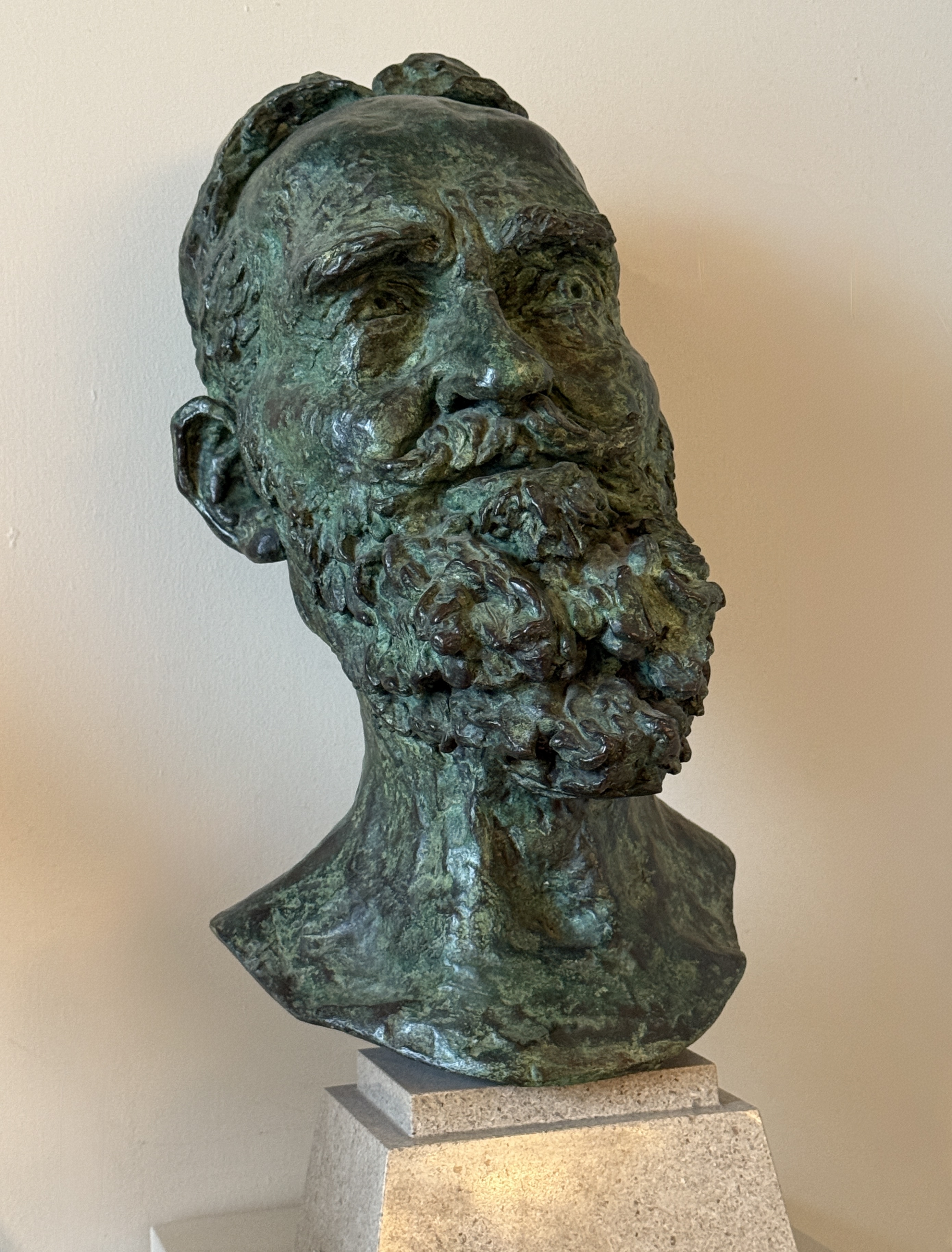
Our first literary visit was to the birthplace of GB Shaw at 33 Synge Street. He and Bob Dylan are the only people to receive a Nobel Prize for literature and an Academy award.
Shaw donated a third of his literary estate to the National Gallery of Ireland because he spent so much time there as a young man and attributes it as the place where he received an education. The bust at left can be seen in the Shaw Room at the gallery.
The best single place to appreciate Dublin’s literary tradition is MoLI, the Museum of Literature Ireland. The building used to be the headquarters of Dublin University College. James Joyce was a student there from 1899-1902. One of my favourite poets, Gerard Manley Hopkins, was professor of Greek from 1884-89.
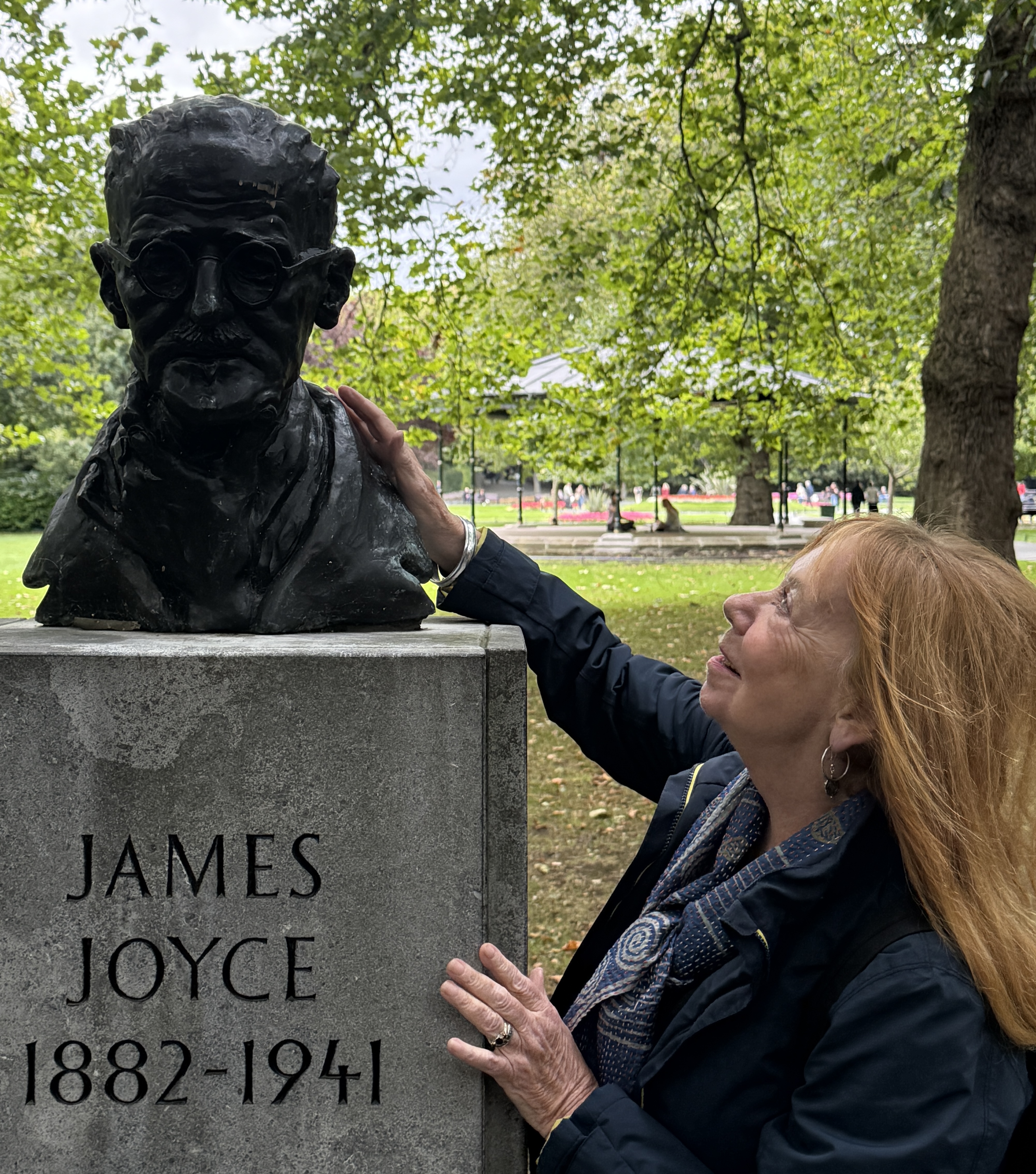
The museum has the first copy of the first edition of Ulysses. Opposite the museum is St Stephen’s Green where you will find a fine bust of Joyce, shown here with Julia.
We had afternoon tea at Bewley’s, the oldest cafe in the city and possibly all of Ireland. The cafe has a table dedicated to Joyce and his wife Nora Barnacle. It hosts plays based on Joyce’s short stories.
Highlight for me was the sjperb exhibition of the life of WB Yeats at the National Library of Ireland. The exhibition helped me appreciate the influence of mysticism on Yeats and his writing. In a letter to his mentor John O’Leary, Yeats wrote: “The mystical life is the centre of all that I do and all that I think and all that I write.”
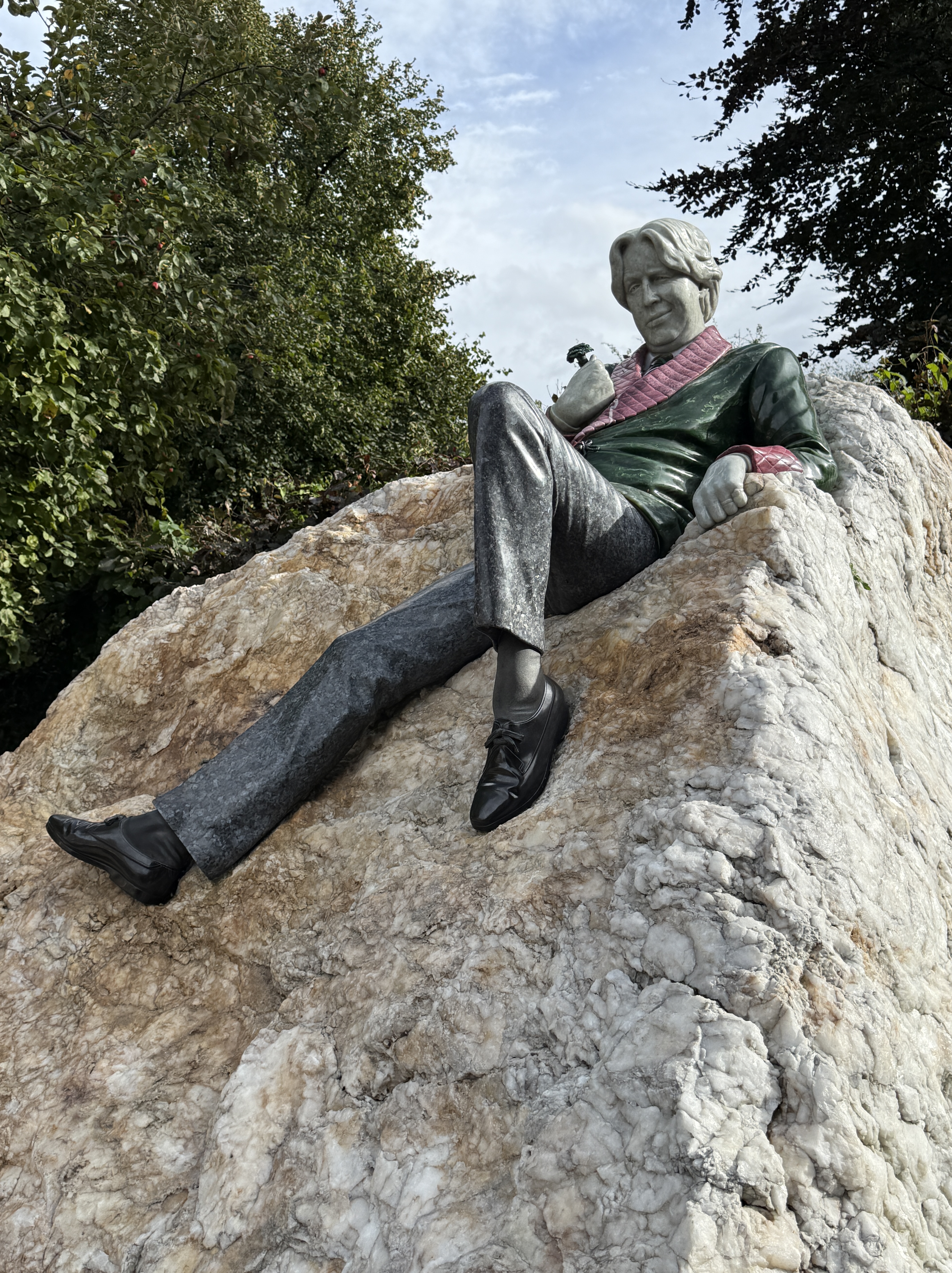
A short walk away is the birthplace of Oscar Wilde (1854-1900) at 1 Merrion Square. It’s currently the headquarters of American College Dublin. Wilde’s parents were highly accomplished, and outside the door you will find plaques dedicated to them alongside the plaque for their son. Across the road in St Stephen’s Green is a beautiful statue of Wilde.
One of the lovely things about Dublin is the friendliness of the locals. We encountered smiles and helpful people everywhere.
We also experienced plenty of examples of Irish humour or possibly logic. A pub near where we were staying near Portobello Road displayed a large sign: “Food served all day”. I went inside and asked the barman for a menu. “We don’t serve food,” he said, “haven’t for years.” I told him about the sign outside. He replied: “Oh, we leave that there because you never know, we might start serving food again.”
The only frustration we encountered was the paucity of traditional music in pubs. The city has plenty of pubs and many offer music, but not enough offer traditional Irish music. The stout is lovely, though expensive at around 6-8 Euro a pint. I preferred Murphy’s instead of Beamish or Guinness.
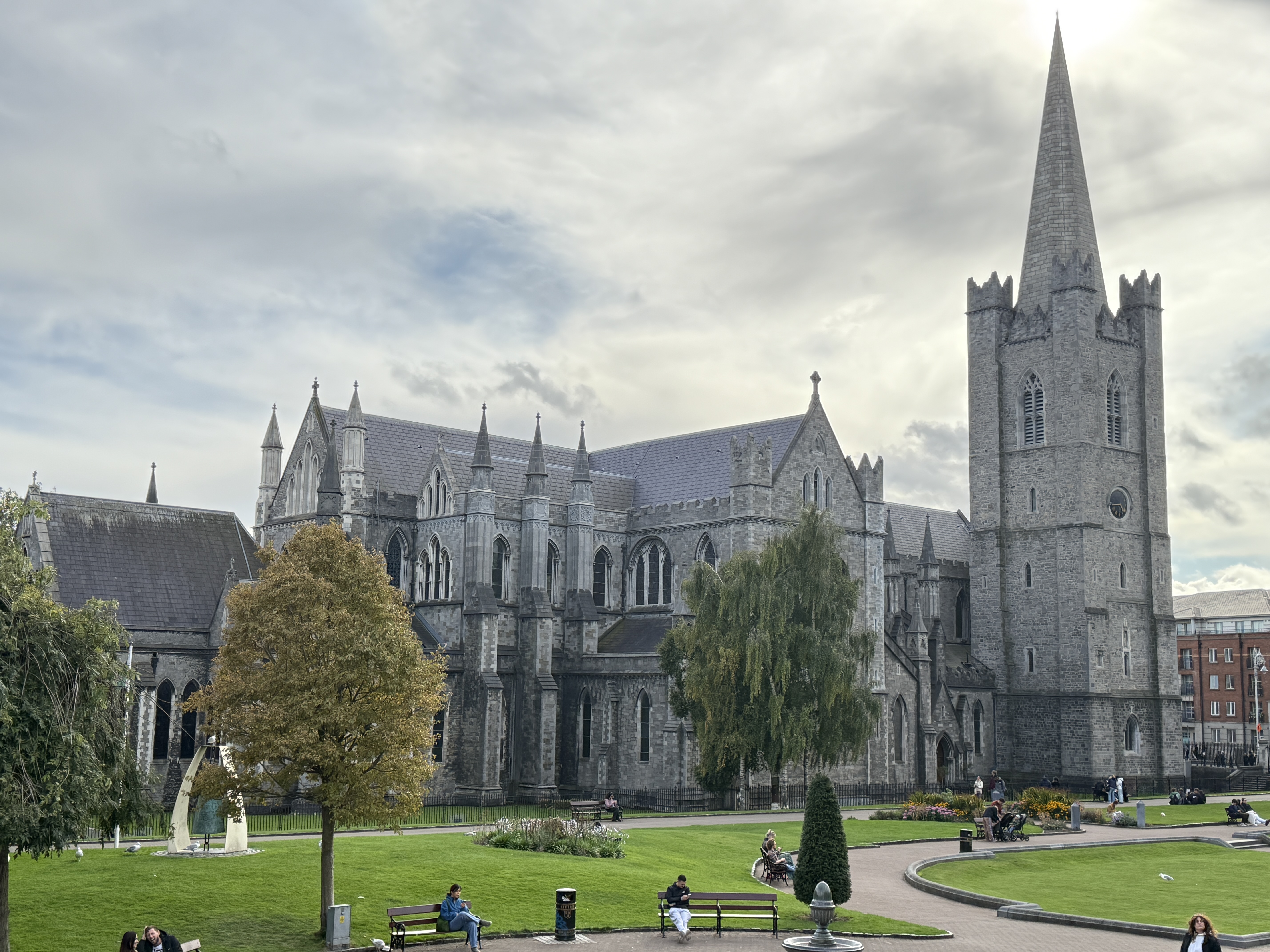
St Patrick’s is Dublin’s main cathedral. The park next to the church celebrates the place where St Patrick apparently baptised local inhabitants in the fifth century.
Categories: Dublin
 Stephen Quinn, PhD